
Is It Time to Rethink the Humble Oral Estrogen Pill?
If you've spent any time reading about menopause online, you've probably picked up on the general message: patches, gels, and sprays (called transdermal estrogen, meaning "through the skin") are good. The estrogen pill you swallow (called oral estrogen) is treated like old news — something clinicians "used to" prescribe before we knew better.
I want to push back on that a little. Not because the pill is secretly better — for most people, it isn't — but because the blanket "pills are bad" message skips over some real nuance. And that nuance matters most for people who don't have easy access to a specialty pharmacy, insurance coverage for patches, or the time to deal with a gel that has to dry on your skin for five minutes before you can get dressed.
Patches have been genuinely hard to get lately, between manufacturing and supply issues and insurance hurdles, so this conversation has become front and center for a lot of patients.
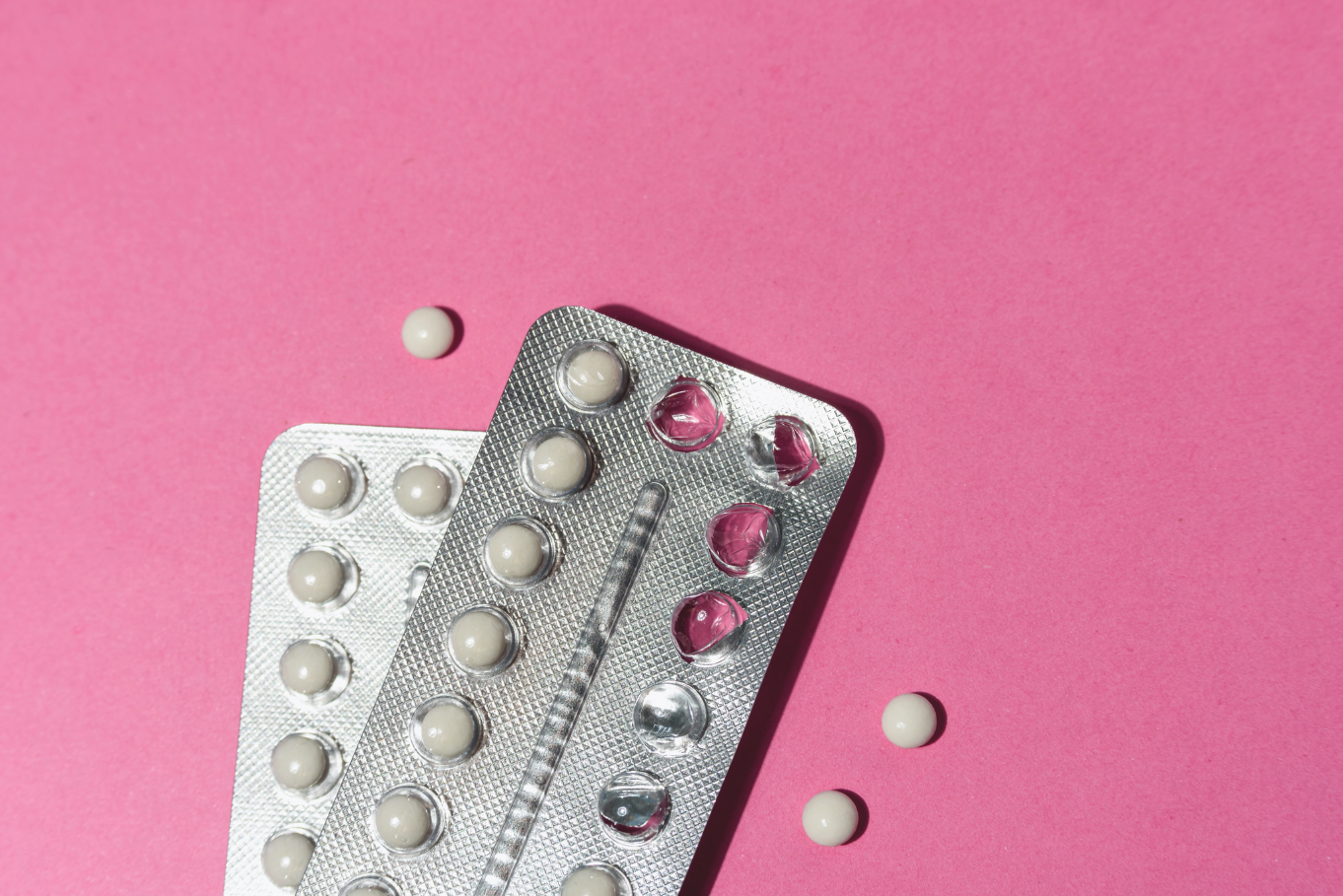
Why the pill got its bad reputation
The concern with the oral estrogen pill is real — it's not just old-fashioned caution. Here's the mechanism in plain terms:
When you swallow a pill, your gut absorbs it and sends it straight to your liver before it goes anywhere else in your body. This is called first-pass metabolism — the liver gets "first pass" at the drug before it reaches the rest of you. A patch or gel skips this step, because it's absorbed through the skin straight into your bloodstream.
That trip through the liver does a few things:
- It changes the balance between estradiol (the main, most active form of estrogen) and estrone (a weaker form). A swallowed pill produces roughly 5 parts estrone to 1 part estradiol. A patch or gel keeps that ratio closer to 1:1, which is more like what your body made before menopause.
- It pushes the liver to make more of certain proteins, including some that affect blood clotting.
That second point is the real reason people worry about oral estrogen. Two things come from it:
1. A higher risk of blood clots. This is called VTE, short for venous thromboembolism — a blood clot that forms in a vein, most often in the leg (deep vein thrombosis) or that travels to the lung (pulmonary embolism). Studies show the pill roughly doubles clot risk compared with a normal (non-estrogen) baseline, while patches and gels don't seem to raise clot risk above baseline at all. This is the single biggest reason prescribers default to patches.
Worth a specific note here: not all oral estrogen pills are the same molecule. Older large studies (like the Women's Health Initiative, or WHI) mostly used a pill called conjugated equine estrogen (CEE) — a mix of estrogens originally derived from pregnant mares' urine, sold as Premarin. The oral estradiol pill more commonly prescribed today (bio-identical, chemically the same estrogen your body makes) appears to carry a somewhat lower clot risk than oral CEE — one large UK database study found roughly a 15% lower clot risk with oral estradiol compared with oral CEE. It's still likely higher-risk than a patch, and the studies comparing the two pills directly aren't fully consistent with each other, but it's a real distinction: "oral estrogen" as a category includes more than one drug, and CEE appears to carry more risk than plain oral estradiol.
2. A higher chance of gallstones. Gallstones are small, hard deposits that form in the gallbladder (a small organ near your liver that stores bile, a fluid that helps digest fat). In the WHI study, women taking oral CEE were about 60–70% more likely to develop gallstones or need gallbladder surgery than women on placebo. Being overweight, having been pregnant multiple times, or losing weight quickly all raise this risk further. Patches don't seem to carry this same extra risk. It's worth flagging that this specific number comes from the CEE pill, not the oral estradiol pill — a large French study found the excess gallbladder-surgery risk was specific to taking estrogen by mouth in general (versus a patch), which suggests oral estradiol likely carries some of this same risk too, just not necessarily to the identical degree seen with CEE.
None of this is outdated or made up — it's solid, repeated science. But it's also gotten flattened into something more black-and-white than it actually is, and that's where I want to slow down.
One place the pill actually looks better on paper — and why that's not the full story
Here's something that rarely gets mentioned in the "patches are simply better" narrative: oral estrogen has a more favorable effect on your standard cholesterol panel — and on an important marker called Lp(a) — than a patch does.
- LDL (often called "bad cholesterol" — it's the type that can build up inside blood vessel walls): oral estrogen lowers it more than a patch does, by up to about 20% in some studies, because that same liver stimulation that raises clotting factors also ramps up the liver's ability to clear LDL from the blood.
- HDL ("good cholesterol" — it helps carry cholesterol away from vessel walls): oral estrogen raises it more than a patch does too.
- Triglycerides (a type of fat in the blood): this is where oral loses its advantage. Oral estrogen raises triglycerides, sometimes meaningfully, while a patch tends to be neutral or even lowers them slightly. This is exactly why high triglycerides is one of the specific reasons providers steer toward a patch instead of a pill.
- Lp(a) (short for lipoprotein(a) — a cholesterol-carrying particle that's mostly determined by your genes, doesn't move much with diet or exercise, and is increasingly recognized as its own independent risk factor for heart disease): both oral and transdermal estrogen lower it, but oral lowers it substantially more. In one head-to-head study, an oral estradiol pill dropped Lp(a) by about 31% over a year, compared to about 16% with a patch at a typical dose. This gap is biggest in people who start with the highest Lp(a) levels, and it comes from the same liver-first-pass mechanism as everything else in this list — the liver dials down its own Lp(a) production when it encounters oral estrogen.
So it's tempting to conclude "better LDL, HDL, and Lp(a) numbers on oral must mean better heart protection." That conclusion isn't supported, for a few reasons:
1. The better-looking numbers haven't translated into fewer heart attacks or strokes.No study has shown that oral estrogen's more favorable cholesterol and Lp(a) panel actually impacts cardiovascular risk.
2. The LDL "improvement" may not be as good as the number suggests.The same triglyceride rise that comes with oral estrogen tends to shift LDL toward smaller, denser particles — a pattern that's considered more likely to contribute to artery plaque buildup than larger, fluffier LDL particles, even when the total LDL number is lower. One study found that while oral estrogen lowered the LDL number more than a patch, the patch actually produced larger, healthier-looking LDL particles despite the smaller drop on paper. A lower LDL number isn't automatically a "better" LDL.
3. Where cardiovascular outcomes do differ between routes in observational data, they tend to favor the patch, not the pill — though no large trial has directly compared the two routes for heart attack or stroke outcomes, so this remains suggestive rather than settled.
One more wrinkle: if you still have your uterus, you also need a progestogen (a progesterone-type hormone) alongside estrogen to protect the uterine lining, and progestogens tend to blunt or reverse some of estrogen's HDL benefit — so the "oral has better cholesterol numbers" advantage is smaller in practice for most women than it looks in an estrogen-only study. (Progestogen type and dose didn't meaningfully change the Lp(a) effect in the data, for what it's worth — that one seems to be estrogen-driven either way.)
The bottom line on this piece: oral estrogen does move your cholesterol panel — and Lp(a) — in a more favorable direction than a patch — genuinely one of the few places where the pill has an edge on paper. But it comes bundled with a triglyceride rise, a shift toward smaller/denser LDL particles, and no proven reduction in actual heart attack or stroke risk. It's an interesting asterisk at the moment, not a settled reason to pick oral over a patch for heart health.
The risks aren't as absolute as they sound
Not all migraines carry the same warning. You'll often hear "estrogen is dangerous if you get migraines." But the real evidence is specific to one kind: migraine with aura. Aura refers to warning symptoms that show up before or during a migraine — things like seeing flashing lights, blind spots, or feeling numbness or tingling. This is different from the more common migraine without aura, which is just the headache itself, without those warning symptoms.
Migraine with aura is linked to a higher risk of stroke on its own, and taking estrogen on top of it adds to that risk. But almost all of the strongest data on this comes from birth control pills, which use a much stronger, more potent form of estrogen (called ethinyl estradiol — the same hormone used in the vaginal birth control ring, like NuvaRing) at doses many times higher than what's used for menopause treatment.
What this means in practice, according to current medical guidance: if you get migraines without aura, estrogen therapy is not considered off-limits — a patch is still usually preferred, but it's not a hard "no." If you get migraine with aura, it's also not an automatic "no" — but your provider will usually lean strongly toward a patch instead of a pill and watch your other heart and blood vessel risk factors closely. The distinction between "with aura" and "without aura" matters enormously, and it gets lost constantly in general health advice.
There's a second, separate reason patches are preferred for migraine, beyond the stroke-risk conversation above: migraines are commonly triggered by a drop in estrogen, not just by estrogen itself. Think of the headache that shows up right before your period, when estrogen falls quickly — that's the same mechanism. A swallowed pill produces a rise-and-fall pattern over the day (it peaks, then drops as it's cleared from your body), and doing that every 24 hours can repeatedly trigger that "estrogen just dropped" migraine pattern. A patch, by contrast, releases estrogen slowly and steadily over several days, so your levels stay much flatter — fewer peaks, fewer drops, and often fewer migraines as a result. This is a completely separate benefit from the clot-risk conversation, and it's a big part of why patches tend to be favored for migraine-prone patients specifically, not just people with migraine with aura.
A family member's blood clot is not the same as your own. This is the other place where caution gets applied too broadly. Here's the real difference:
- If you personally have had an unexplained blood clot, or you've been diagnosed with a clotting disorder (sometimes called thrombophilia — a genetic or acquired condition that makes your blood clot more easily, such as Factor V Leiden or antiphospholipid syndrome), that's a serious risk factor. In that situation, a personal clot history has been linked to roughly a 7-fold increase in clot risk on oral estrogen, with much less risk increase seen on a patch. This usually means sticking to a patch or skipping systemic estrogen altogether.
- If it's only a family member — a parent or sibling had a clot, but you never have — that's a real but much smaller signal, raising your own risk somewhere in the range of 2 to 4 times, not 7 times. Current medical guidelines actually say that routine blood testing for clotting disorders is not recommended for someone with no personal history and no strong family pattern. A family history alone is a good reason to ask more questions (who had the clot, was it caused by something like surgery or a long flight, or did it happen with no clear cause, and how old were they) — but it's not, by itself, a reason to rule out the pill the same way a personal clot would be.
What about taking the pill a different way — under the tongue or vaginally?
Here's a part of this topic I find genuinely interesting, and one that doesn't get talked about much. There's an older set of small studies — mostly from the 1980s through the 2000s, plus some newer ones in transgender hormone research — looking at what happens when the same oral estradiol pill is taken sublingually (dissolved under the tongue) or inserted vaginally, instead of swallowed.
Here's what those studies found:
- Under the tongue: absorption happens much faster and reaches a much higher peak level in the blood. In one study, a 1 mg dose taken sublingually reached a peak blood level about four times higher, and much faster (around 1 hour) than the same dose swallowed (which peaked around 8 hours later, at a much lower level). Because it's absorbed so much more efficiently this way, a smaller dose taken sublingually can reach blood levels similar to a larger dose swallowed.
- Vaginally: a similar pattern shows up. Blood vessels in the vagina drain into a different part of the circulatory system than the gut does, so the medication reaches the bloodstream more directly and skips a large chunk of that "first pass" through the liver. Older studies found vaginally-absorbed estrogen can reach blood levels several times higher than the same dose swallowed.
Now here's the honest, important caveat, and I don't want to gloss over it: we don't actually know if this translates into a lower risk of blood clots. It's tempting to assume "less liver involvement = less clotting risk," and that logic is reasonable. But reasonable isn't the same as proven.
There's actually a piece of evidence that complicates this assumption: one study compared a different type of estrogen — ethinyl estradiol, the strong kind used in birth control pills (it's also the hormone in the vaginal birth control ring, like NuvaRing) — taken by mouth versus vaginally, and found the two routes affected clotting-related proteins and liver proteins about the same — meaning the route didn't matter much for that particular drug. That study didn't use the type of estrogen (estradiol) that's typically prescribed for menopause, so it doesn't settle the question — but it's a real reason for caution before assuming "skip the first pass through the liver, skip the clot risk."
The bottom line: no one has done the kind of large study that tracks actual blood clots in people using sublingual or vaginal dosing of an oral pill compared to swallowing it. The idea is scientifically plausible and the pharmacokinetic data (meaning: how the drug moves through your blood over time) is real — but it's not the same as having outcome data. If you're using an oral pill this way, it's important to understand you're in "reasonable, educated guess" territory, not "proven as safe as a patch" territory.
There's also a specific reason sublingual and vaginal dosing probably won't help with migraines the way a patch does, even though they raise blood levels higher and faster than swallowing the same pill. Remember, the migraine benefit of a patch comes from steady, flat levels — avoiding the rise-and-fall pattern that can trigger a "estrogen just dropped" headache. Sublingual and vaginal dosing do the opposite of flat: they produce a sharp, fast spike followed by a relatively fast drop-off, an even more dramatic peak-and-crash curve than swallowing the pill produces. So while these routes may offer a dosing advantage (lower dose needed for a given blood level) and possibly a first-pass-liver advantage, they're not a substitute for a patch if migraine control — specifically avoiding the estrogen-drop trigger — is the goal. If migraines are a major concern, a patch's steady delivery remains the better-suited option, separate from the clot-risk question.
So why does the humble pill still matter?
Because it's cheap, and it's everywhere. A generic oral estradiol pill often costs just a few dollars a month, is stocked at almost every pharmacy, usually doesn't require special insurance approval the way some patches do, and doesn't require managing skin irritation, application timing, or a relationship with a specialty pharmacy. For someone without a personal clot history, without migraine with aura, and without other major heart and blood vessel risk factors, the pill is often the treatment that actually gets taken consistently — and a treatment you actually take is the one that works.
The bottom line
A patch or gel is still the more cautious, better-studied choice for people with migraine with aura, a personal history of blood clots or a diagnosed clotting disorder, high triglycerides, obesity, or other heart and blood vessel risk factors — and that should stay the default recommendation in those situations. But "oral estrogen" isn't one single risk category, and neither is "risk factor for oral estrogen." Migraine without aura is not migraine with aura. A family history is not a personal history. And for the right person, the humble, unglamorous, inexpensive pill — however it's taken — still has a real place in this conversation.
References
ACOG Committee Opinion No. 556. Postmenopausal estrogen therapy: route of administration and risk of venous thromboembolism. Obstet Gynecol. 2013;121(4):887-890.
Mohammed K, Abu Dabrh AM, Benkhadra K, et al. Oral vs transdermal estrogen therapy and vascular events: a systematic review and meta-analysis. J Clin Endocrinol Metab. 2015;100(11):4012-20.
Vinogradova Y, Coupland C, Hippisley-Cox J. Use of hormone replacement therapy and risk of venous thromboembolism: nested case-control studies using the QResearch and CPRD databases. BMJ. 2019;364:k4810. (also the source for the oral estradiol vs. oral CEE comparison above)
Scarabin PY, Oger E, Plu-Bureau G (EStrogen and THromboEmbolism Risk Study Group). Differential association of oral and transdermal oestrogen-replacement therapy with venous thromboembolism risk. Lancet. 2003;362(9382):428-32.
Skeith L, Bates SM. Sex hormone influences on venous thrombotic and cardiovascular risk. N Engl J Med. 2026;394(15):1514-1528.
Jayasena CN, Devine K, Barber K, et al. Society for Endocrinology guideline for understanding, diagnosing and treating female hypogonadism. Clin Endocrinol. 2024;101(5):409-442.
Cirillo DJ, Wallace RB, Rodabough RJ, et al. Effect of estrogen therapy on gallbladder disease. JAMA. 2005;293(3):330-9.
Racine A, Bijon A, Fournier A, et al. Menopausal hormone therapy and risk of cholecystectomy: a prospective study based on the French E3N cohort. CMAJ. 2013;185(7):555-61.
Kuhl H. Pharmacology of estrogens and progestogens: influence of different routes of administration. Climacteric. 2005;8(suppl 1):3-63.
Doll E, Gunsolus I, Thorgerson A, Tangpricha V, Lamberton N, Sarvaideo JL. Pharmacokinetics of sublingual versus oral estradiol in transgender women. Endocrine Practice. 2022;28(3):237-242.
Price TM, Blauer KL, Hansen M, Stanczyk F, Lobo R, Bates GW. Single-dose pharmacokinetics of sublingual versus oral administration of micronized 17β-estradiol. Obstet Gynecol. 1997;89(3):340-345.
Rigg LA, Hermann H, Yen SS. Absorption of estrogens from vaginal creams. N Engl J Med. 1978;298:195-197. (Note: this classic study looked at vaginal creams specifically, not a vaginal-inserted oral tablet — related but not an identical scenario to the vaginal-tablet use discussed above.)
Sitruk-Ware R, Plu-Bureau G, Menard J, et al. Effects of oral and transvaginal ethinyl estradiol on hemostatic factors and hepatic proteins in a randomized, crossover study. J Clin Endocrinol Metab. 2007;92(6):2074-9.
Korn TF, Bernstein C. Migraine across the menopausal transition and beyond: a narrative review. Headache. 2026;66(6):1390-1404.
Newman CB, Blaha MJ, Boord JB, et al. Lipid management in patients with endocrine disorders: an Endocrine Society clinical practice guideline. J Clin Endocrinol Metab. 2020;105(12):dgaa674.
Karjalainen A, Heikkinen J, Savolainen MJ, Bäckström AC, Kesäniemi YA. Mechanisms regulating LDL metabolism in subjects on peroral and transdermal estrogen replacement therapy. Arterioscler Thromb Vasc Biol. 2000;20(4):1101-6.
Doma M, Loayza Pintado JJ, Atwal A, et al. Efficacy of oral versus transdermal estrogen therapy on cardiovascular and lipid parameters among postmenopausal women: a systematic review and meta-analysis of randomized clinical trials. Menopause. 2025.
Nie G, Yang X, Wang Y, et al. The effects of menopause hormone therapy on lipid profile in postmenopausal women: a systematic review and meta-analysis. Front Pharmacol. 2022;13:850815.
Shufelt CL, Manson JE. Menopausal hormone therapy and cardiovascular disease: the role of formulation, dose, and route of delivery. J Clin Endocrinol Metab. 2021;106(5):1245-1254.
Wakatsuki A, Okatani Y, Ikenoue N, Fukaya T. Different effects of oral conjugated equine estrogen and transdermal estrogen replacement therapy on size and oxidative susceptibility of low- density lipoprotein particles in postmenopausal women. Circulation. 2002;106(14):1771-6.
El Khoudary SR, Aggarwal B, Beckie TM, et al. Menopause transition and cardiovascular disease risk: implications for timing of early prevention: a scientific statement from the American Heart Association. Circulation. 2020;142(25):e506-e532.
