
Picture this: you've watched your hips and legs accumulate fat since your early 20s — fat that doesn't budge no matter how carefully you eat or how consistently you exercise. Your upper body looks completely different from your lower body. Your legs ache. They bruise easily. They feel heavy by the end of the day. You've brought this up with providers more times than you can count. You've been handed referrals to dietitians and handed a pamphlet about caloric deficits.
Now you're in perimenopause, and things are visibly worse. A new provider tells you weight gain is normal at this age.
You leave without an answer. Again.
For many people with lipedema, this is not a hypothetical. Research tracking patients from symptom onset to diagnosis has found a mean delay of approximately 15 years.¹ Fifteen years of being told the problem is your behavior, not your biology.
What Lipedema Actually Is
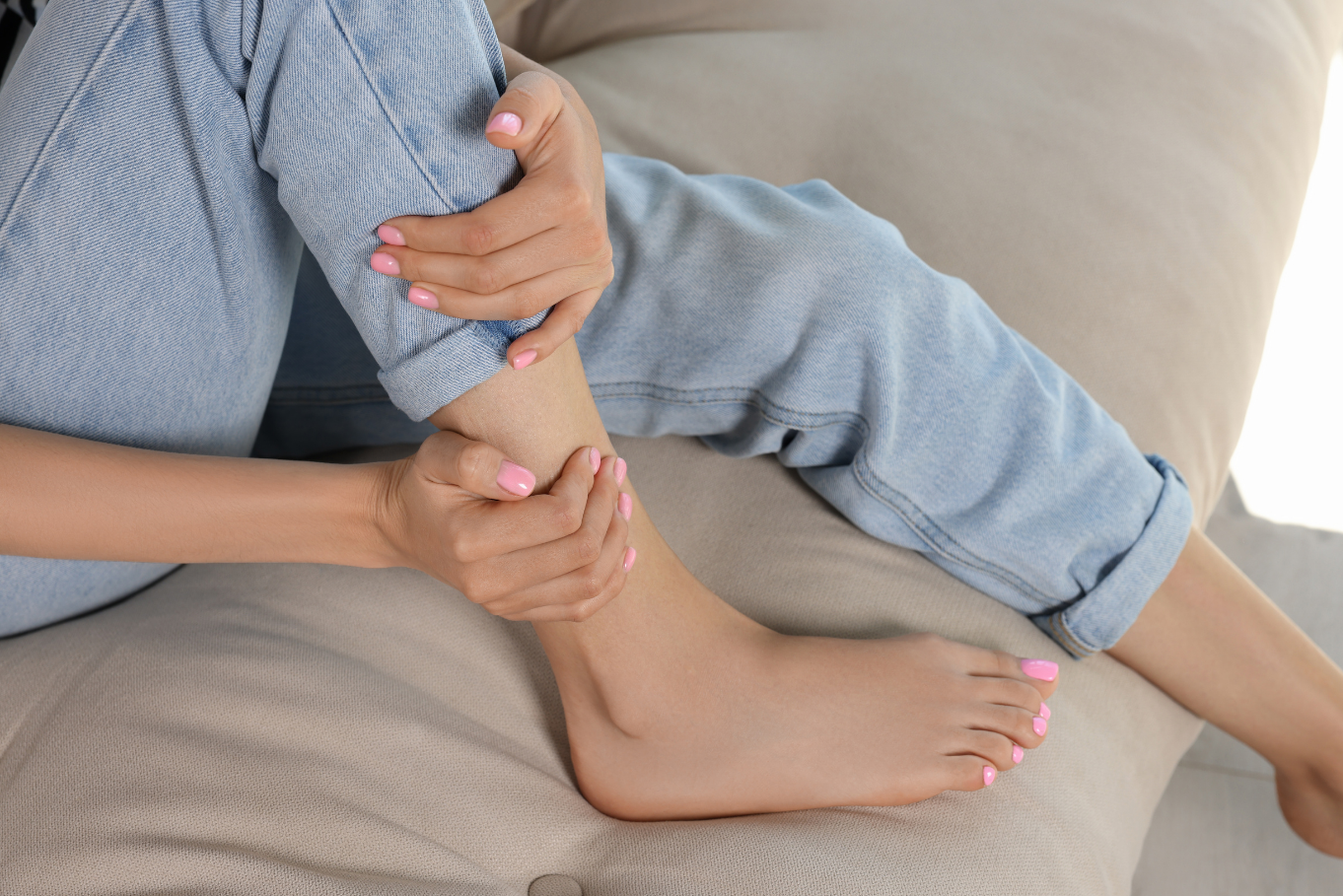
Lipedema is a chronic, progressive disorder estimated to affect approximately 10% of people with female physiology worldwide — though prevalence data are limited by the condition's high rate of underdiagnosis, and some estimates range higher.²⁻⁴ It is characterized by bilateral, symmetrical accumulation of subcutaneous fat in the extremities — particularly the hips, legs, and sometimes arms — while typically sparing the hands and feet. Patients experience fat deposits that are resistant to conventional weight loss, accompanied by pain, tenderness, and easy bruising.²'³'⁵
It is not obesity. It is not lymphedema. It is its own condition with its own pathophysiology — and that distinction matters enormously, because the treatments for obesity and lymphedema do not address lipedema. Among patients with undiagnosed lipedema who underwent bariatric surgery, pain scores increased after surgery despite mean excess weight loss exceeding 70%, and extremity circumference showed minimal change.⁶'⁷ The fat didn't come from eating too much. It won't leave from eating less.
The diagnosis of lipedema remains clinical, based on detailed history, physical examination, and exclusion of differential diagnoses. No officially approved laboratory, genetic, or imaging tests exist to confirm the disease.³'⁸'⁹ This is both a diagnostic reality and a systemic problem: without an objective confirmatory test, the diagnosis depends entirely on whether a provider knows what they're looking for — and most don't.
Why Menopause Is a Critical Inflection Point
Lipedema often manifests or worsens during periods of hormonal fluctuation — puberty, pregnancy, and menopause — underscoring a strong endocrine influence in its pathophysiology.²'³'¹⁰'¹¹ This means midlife is one of the most common times for someone to notice their symptoms intensifying, and also one of the most common times for those symptoms to be attributed to something else entirely.
"You're gaining weight because of menopause." "Swelling in the legs is common as we age." "Your joints hurt because of hormonal changes."
Some of that may be true. But for people with lipedema, the perimenopause transition can genuinely accelerate disease progression. A 2025 peer-reviewed mini-review in Frontiers in Cell and Developmental Biology proposed a pathophysiological model in which menopause acts as a critical turning point in lipedema progression, driven by estrogen receptor imbalance, localized estrogen excess within adipose tissue, and disrupted fat metabolism — contributing to ongoing inflammation, fibrosis, and immune dysregulation.⁴ A 2026 systematic review similarly identified estrogen receptor alterations and metabolic imbalance as central pathophysiological hypotheses linking hormonal transitions to lipedema.¹⁰ This is emerging science, not settled consensus, but it offers a mechanistic explanation for what many patients have been observing for years: that perimenopause makes lipedema worse, meaningfully and measurably.
The clinical problem is that in a perimenopausal patient, worsening lower body fat distribution, joint pain, fatigue, and heaviness in the legs can all be attributed to hormonal changes. Without a provider who specifically considers lipedema, the diagnosis gets missed — again — at exactly the moment the patient most needs it.
The Bendy Menopause Overlap
At Phases Clinic, we see a lot of patients who are hypermobile, and the lipedema overlap is something we pay close attention to.
Lipedema commonly co-occurs with hypermobility spectrum disorders, including hypermobile Ehlers-Danlos syndrome (hEDS) and other hypermobility spectrum disorders (HSD).⁵ Both conditions involve connective tissue dysfunction, and emerging research suggests they may share underlying pathophysiology rather than simply occurring together by chance.¹²'¹³ A 2025 pilot study found that participants with both hypermobility disorders and lipedema showed significantly increased deep and superficial fascia thickness across all lower limb regions compared to those with hypermobility disorders alone — a measurable structural difference suggesting the conditions interact at the tissue level.¹³
A separate 2025 cross-sectional study found that 44% of lipedema patients reported current joint hypermobility, and 60% recalled being hypermobile in childhood.¹² Earlier research identified hypermobility in 44–58% of lipedema patients, compared to 23% in patients with Dercum's disease.¹⁴ That's not a small signal.
For patients navigating both, the symptom picture gets complicated in ways that make each condition harder to identify. Joint laxity and tissue heaviness can coexist. Pain that might be attributed to hypermobility may also have a lipedema component. Fatigue, bruising, and swelling can have multiple contributing causes. And for someone in perimenopause, the hormonal layer adds yet another variable — which is exactly why these patients so often end up in a diagnostic loop, collecting dismissed complaints instead of answers.
What Misdiagnosis Actually Costs
The cost of a years-long diagnostic delay isn't just emotional, though the emotional toll is real. Delayed diagnosis is associated with greater symptom burden, worse quality of life, and increased costs for patients and healthcare systems.⁸'⁹ In the meantime, patients are often enrolled in interventions that don't help — weight loss programs, calorie restriction, exercise regimens — and blamed for their lack of response.
Research on patient healthcare experiences in lipedema shows significantly low satisfaction with care, with the lowest scores in overall impression of care — reflecting perceived inefficiency and unmet expectations after delays spanning decades and numerous healthcare visits.¹⁵
There is also a specific risk for hypermobile patients: recommending high-impact exercise to "lose the weight" without considering the full clinical picture can cause joint injury and post-exertional symptom flares for people with hEDS or HSD. It isn't neutral advice — it can actively cause harm.
What to Look For
Lipedema is a clinical diagnosis. There is no blood test, no imaging requirement, no referral necessary to start suspecting it. The hallmarks:
Disproportionate fat distribution — lower body significantly larger relative to upper body, bilaterally symmetrical, sparing the hands and feet.
Fat that doesn't respond to diet or exercise — this is definitional, not a character judgment.
Pain and tenderness — the fat tissue itself is painful to pressure, not just the joints or muscles around it.
Easy bruising — fragile capillaries are a feature of lipedema tissue.
Symptom onset or worsening tied to hormonal transitions — puberty, pregnancy, perimenopause.
Family history — approximately 50–60% of patients in most cohorts report a family history of lipedema, suggesting a meaningful genetic component.¹⁶'¹⁷
If this picture sounds familiar — whether for yourself or for a patient you're thinking of — it's worth naming lipedema explicitly and pursuing further evaluation rather than defaulting to a weight conversation.
A Note on Language
People with lipedema have almost universally been told, implicitly or explicitly, that their bodies are a problem they created. The clinical reality is the opposite. This is a chronic adipose tissue disorder with significant connective tissue involvement, a strong hormonal component, and likely genetic underpinnings.¹²'¹³ The fat is not a failure of willpower. The pain is not fabricated. The lack of response to dieting is not evidence of non-compliance.
Naming that clearly — to patients and to ourselves as providers — is part of delivering accurate care.
Think lipedema might be part of your picture? Phases Clinic takes a thorough, whole-person approach to complex midlife presentations. Learn more about working with us.
References
Bauer AT, von Lukowicz D, Lossagk K, et al. New insights on lipedema: the enigmatic disease of the peripheral fat. Plast Reconstr Surg. 2019;144(6):1475–1484. doi:10.1097/PRS.0000000000006280.
Falck J, Mårtensson J, Jonasson LL, Dudek J, Nygårdh A. Experiences of sexual health and intimate relationships in women with lipedema: a qualitative study. J Adv Nurs. 2025;81(12):8829–8838. doi:10.1111/jan.16933.
Vazirnia A, Smart DR, Mohseni Y, Amron DM. Lipedema diagnosis, clinical manifestations, and therapeutics: a systematic review. Int J Dermatol. 2026. doi:10.1111/ijd.70227.
Rabiee A. Lipedema and adipose tissue: current understanding, controversies, and future directions. Front Cell Dev Biol. 2025;13:1691161. doi:10.3389/fcell.2025.1691161.
Lipedema Foundation. 10 things to know about lipedema. lipedema.org. 2024.
Zevallos A, Schmidt J, Thaher O, Bausch D, Pouwels S. Lipedema after bariatric and metabolic surgery: a scoping review. Obes Surg. 2025. doi:10.1007/s11695-025-08021-1.
Cornely ME, Hasenberg T, Cornely OA, et al. Persistent lipedema pain in patients after bariatric surgery: a case series of 13 patients. Surg Obes Relat Dis. 2022;18(5):628–633. doi:10.1016/j.soard.2021.12.027.
Kruppa P, Crescenzi R, Faerber G, et al. Lipedema World Alliance Delphi consensus-based position paper on the definition and management of lipedema. Nat Commun. 2026. doi:10.1038/s41467-025-68232-z.
Kruppa P, Georgiou I, Biermann N, et al. Lipedema — pathogenesis, diagnosis, and treatment options. Dtsch Arztebl Int. 2020;117(22–23):396–403. doi:10.3238/arztebl.2020.0396.
Lüchinger JE, Pavicic E, Giachino CL, Stute P. Impact of hormones on lipedema development: a systematic literature review. Arch Gynecol Obstet. 2026;313(1):60. doi:10.1007/s00404-026-08318-1.
Szél E, Kemény L, Groma G, Szolnoky G. Pathophysiological dilemmas of lipedema. Med Hypotheses. 2014;83(5):599–606. doi:10.1016/j.mehy.2014.08.011.
Fiengo E, Sbarbati A. Lipedema and hypermobility spectrum disorders sharing pathophysiology: a cross-sectional observational study. J Clin Med. 2025;14(20):7195. doi:10.3390/jcm14207195.
Pérez-Moreno A, et al. Intersection between hypermobile Ehlers-Danlos syndrome and adipose disorders: investigating fascial remodeling with ultrasound imaging. J Rare Dis. 2025. doi:10.1007/s44162-025-00113-x.
Beltran K, Herbst KL. Differentiating lipedema and Dercum's disease. Int J Obes. 2017;41(2):240–245. doi:10.1038/ijo.2016.205.
van la Parra RFD, et al. Dealing with lipoedema: women's experiences of healthcare, self-care, and treatments — a mixed-methods study. PLoS One. 2024. doi:10.1371/journal.pone.
Luta X, Buso G, Porceddu E, et al. Clinical characteristics, comorbidities, and correlation with advanced lipedema stages: a retrospective study from a Swiss referral centre. PLoS One. 2025;20(3):e0319099. doi:10.1371/journal.pone.0319099.
Grigoriadis D, Sackey E, Riches K, et al. Investigation of clinical characteristics and genome associations in the 'UK Lipoedema' cohort. PLoS One. 2022;17(10):e0274867. doi:10.1371/journal.pone.0274867.
