
Why Histamine Hits Harder in Perimenopause — and What Actually Helps
With the online trend of treating PMS and perimenopause symptoms with antihistamines, more people are asking the same question: what do my hormones have to do with histamine?
It’s a great question — and the answer is more interconnected than most people realize.
To get there, we have to work backwards to the cells that release histamine in the first place: mast cells.
What Mast Cells Actually Do
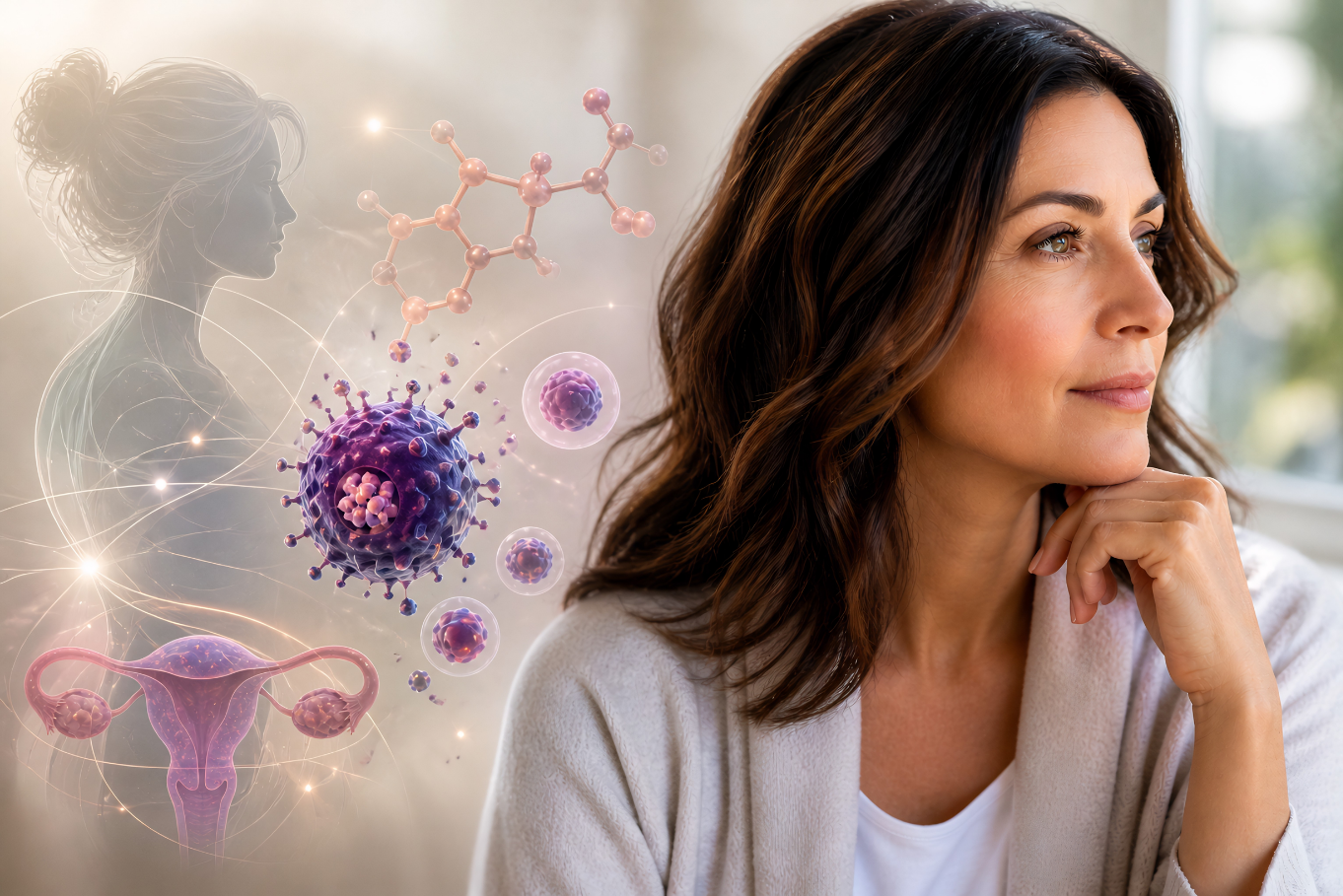
Mast cells are immune cells that live in connective tissue — skin, gut, sinuses, bladder, around blood vessels and nerves. They act as the body’s first line of defense against foreign invaders, releasing histamine and other inflammatory mediators when they encounter viruses, bacteria, toxins, or injury.
That’s a good thing. We want mast cells to do this job.
The problem isn’t that mast cells release histamine. The problem is when they release too much, too often, in response to things that aren’t real threats.
Imagine each mast cell on a dimmer switch. A mast cell turned to a 3 responds appropriately to actual invaders. A mast cell cranked to a 10 starts reacting to perfume, temperature changes, foods, stress, or hormonal shifts — none of which are dangerous.
This is the territory of mast cell activation — too much of a good thing.
Where Hormones Come In
Here’s the part that surprises most people:
Mast cells have receptors for estrogen, progesterone, and testosterone.
That means ovarian hormones can directly modulate mast cell activity. Some patterns are reasonably well established in the basic-science literature:
- Estrogen generally increases mast cell activity. Estradiol can directly trigger degranulation through estrogen receptor-α and amplify IgE-mediated reactions.
- Progesterone is more nuanced. It can reduce mast cell migration and proliferation in some tissues, but it can also promote mast cell maturation and degranulation in others.
- Testosterone’s effects are dose- and sex-dependent, and the picture is even more complicated.
This helps explain why mast cell symptoms often follow a cyclic pattern — flaring around ovulation, the late luteal phase, postpartum, and especially in perimenopause.
It Goes Both Ways: Histamine Talks Back
Here’s where it gets genuinely interesting. Hormones don’t just affect mast cells. Histamine, in turn, affects hormones.
In the brain, histamine acts as a neurotransmitter and directly stimulates the release of GnRH — the hypothalamic signal that drives LH and ultimately estrogen and progesterone production. Histamine also activates the HPA axis, ramping up CRH and cortisol release. (This is part of why feeling histamine-flooded can feel almost indistinguishable from feeling stressed — they share circuitry.)
So what we’re really describing isn’t a one-way street. It’s a feedback loop:
- Estrogen activates mast cells → mast cells release histamine
- Histamine stimulates GnRH and cortisol → which feeds back into the hormonal system
- Hormonal swings then re-tune mast cell sensitivity → and the loop continues
When this loop is running smoothly, you don’t notice it. When it gets amplified — as it often does in perimenopause — symptoms can feel disproportionate to whatever “triggered” them.
The Hidden Variable: DAO
There’s one more piece most articles miss entirely: the enzyme that clears histamine.
Diamine oxidase (DAO) is the body’s primary tool for breaking down histamine — both the histamine your mast cells release and the histamine you eat in food. And DAO levels are not constant.
- DAO is higher in the luteal phase of the cycle (when progesterone is up).
- DAO drops in the follicular phase and around menstruation.
- DAO rises dramatically in pregnancy — by some estimates, up to 1000-fold — produced by the placenta as a kind of histamine firewall.
This single piece of biology explains a pattern many people describe but can’t name: histamine-type symptoms that get worse premenstrually, and remarkable improvement during pregnancy. It’s not your imagination. Your histamine clearance is genuinely fluctuating.
In perimenopause, as progesterone drops earlier and faster than estrogen, DAO support likely drops with it — leaving more histamine in circulation, even before any change in mast cell behavior.
Why Perimenopause Is Such a Common Trigger
The hallmark of PMS and perimenopause isn’t low estrogen.
It’s fluctuation.
Estrogen swings up and down unpredictably, often outpacing progesterone, which is dropping more steadily. Biologically, that kind of volatility is often more destabilizing than a steady low level — for hormones, the nervous system, and inflammatory tone broadly.
Layer on falling progesterone (which means less DAO support), an HPA axis that’s easier to push into stress mode, and a feedback loop that’s already amplified — and you get the perimenopausal pattern many people describe but couldn’t previously explain.
It’s reasonable to suspect, mechanistically, that this volatility also affects mast cell behavior in perimenopause — though direct clinical trial evidence linking perimenopausal estrogen fluctuation specifically to mast cell activation is still limited. We’re extrapolating from receptor biology more than from large studies.
What we do see clinically: many people in perimenopause develop new flushing, food reactions, hives, headaches, palpitations, or anxiety that doesn’t feel like their anxiety. The hormone–histamine axis is one plausible piece of that puzzle.
It’s not in your head. It may, in part, be in your receptors.
So Do Antihistamines Actually Help?
The honest answer: the jury is still out. Very little research has been done specifically on antihistamines for PMS or perimenopausal symptoms.
What we do know is that H1 and H2 blockade is considered a first-line strategy in mast cell activation syndrome (MCAS) — a different condition, but one that shares mechanism with what we’re describing here. That includes:
- H1 blockers — cetirizine, loratadine, fexofenadine
- H2 blockers — famotidine, ranitidine, cimetidine
Using these for hormonally-driven symptoms is a mechanistic extrapolation, not established practice. It can be a reasonable, low-risk experiment for many people — especially when histamine-type symptoms (flushing, hives, GI reactivity, headaches) are prominent. But it doesn’t replace addressing the hormonal piece directly.
Supporting DAO and Lowering Histamine Load
Antihistamines aren’t the only lever. If histamine is part of your picture, you can also work on lowering histamine input and supporting your body’s ability to clear what’s already there.
A few approaches with reasonable mechanistic support:
- Cycle-aware nutrient support. DAO production is influenced by vitamin B6, zinc, magnesium, calcium, iron, and long-chain fatty acids — and dietary intake of these nutrients correlates with serum DAO activity, particularly in the luteal phase. None of these are proven specifically for PMS, but ensuring adequate intake is low-risk and addresses a plausible mechanism. (Bonus: B6 and magnesium have separate, modest evidence for PMS symptoms in their own right.)
- A short, time-limited low-histamine diet trial. The strongest evidence for low-histamine eating comes from histamine intolerance and chronic headache populations, not PMS specifically. But for people whose symptoms cluster around flushing, hives, GI reactivity, or premenstrual headaches, it can be useful data. Common high-histamine foods include aged cheeses, cured and smoked meats, fermented foods (sauerkraut, kimchi, kombucha), alcohol (especially red wine), vinegar-containing foods, and fish that isn’t fresh. Try it for 1–2 weeks — long enough to notice patterns, short enough not to spiral into restriction. If you feel better, that’s information. If you don’t, that’s also information.
- DAO supplements — a cautious yes, with caveats. Oral DAO (typically from porcine kidney or pea sprout) is taken before meals to help break down dietary histamine. The evidence is modest: it has shown benefit in migraine and chronic urticaria specifically in people with low baseline DAO levels, with small effect sizes. The bigger problem is product quality — independent testing has found that some commercial DAO supplements contain little to no actual enzymatic activity. If you’re going to try one, it’s worth choosing a brand with third-party testing or one used in the published trials, and treating it as situational support around higher-histamine meals rather than a daily fix.
A reminder that runs through all of this: in sensitive bodies, over-restriction is its own stressor. The goal is to lower the histamine load enough that your system has breathing room — not to chase a perfectly “clean” diet that ends up driving anxiety and rigidity instead of histamine.
Here's the section with the numbered references stripped:
Other Levers Worth Knowing About
Beyond antihistamines and DAO support, there are a handful of lifestyle and supplement strategies with reasonable mechanistic — and in some cases clinical — support for calming mast cell activity. Stress reduction is arguably the most important. Stress neuropeptides like CRF and substance P don't directly degranulate mast cells, but they lower the activation threshold, making mast cells more reactive to everything else. Mindfulness-based stress reduction has been shown to specifically dampen neurogenic inflammation independently of cortisol changes — meaning it's not just about "stressing less" in a vague sense, but actively retraining the pathway that primes mast cells in the first place. Sleep matters here too, and it runs both directions: sleep deprivation raises histamine levels (which is wake-promoting), and elevated histamine then disrupts sleep further. Restoring consistent sleep is one of the higher-leverage interventions in this loop. Temperature triggers — sudden heat, hot showers, big swings — are explicitly named in mast cell guidelines as worth managing where possible.
On the supplement side, a few options have enough evidence to consider. Vitamin C has both histamine-degrading and mast cell–stabilizing effects in human studies, with oral supplementation reducing blood histamine measurably. Quercetin has outperformed cromolyn (the only FDA-approved mast cell stabilizer) in inhibiting mediator release in human mast cell studies, though oral bioavailability is poor — liposomal formulations or formulations with bromelain are usually a better choice if you're going to try it. Luteolin (found in celery, parsley, and chamomile, and available as a supplement) has similarly strong in-vitro data, often paired with quercetin in commercial products. Omega-3 fatty acids suppress mast cell activation through several mechanisms and are a low-risk addition for most people. Exercise deserves a careful note: regular moderate movement is helpful for overall immune regulation, but in some people intense exercise — particularly within a few hours of eating — can itself be a mast cell trigger. The fix isn't to stop exercising; it's to build conditioning gradually and pay attention to the post-meal window.
How Do I Know If I Have MCAS?
The current expert criteria (per the AAAAI Mast Cell Disorders Committee) require all three of the following:
1. Episodic symptoms affecting at least two organ systems (e.g., skin + GI, or cardiovascular + respiratory),
2. Objective evidence of mast cell mediator release during a flare, and
3. Improvement of symptoms with antimediator therapy (such as antihistamines or mast cell stabilizers).
For the second criterion, the most accepted lab evidence is a rise in serum tryptase during a flare — specifically, a level that is greater than 1.2× the baseline plus 2 ng/mL, drawn within about 4 hours of symptoms.
Other useful biomarkers include:
- Urine N-methylhistamine
- Urine prostaglandin D2 metabolites (including 2,3-dinor-11β-prostaglandin F2α)
- Urine leukotriene E4
A real limitation: these labs commonly come back falsely negative, especially if collected outside a flare window. A normal result doesn’t rule MCAS out.
The role of biopsy is mostly to evaluate mimics — particularly systemic mastocytosis, where mast cells are clonal and abnormally proliferative (bone marrow biopsy is the gold standard there). It’s also worth screening for hereditary alpha-tryptasemia (HαT), which can elevate baseline tryptase.
Are Antihistamines Safe to Take Long-Term?
For most people, yes — at standard doses, both H1 and H2 blockers are well tolerated and considered safe for long-term use.
A few things worth knowing:
- H2 blockers lower stomach acid. Long-term use (≥2 years) has been associated with modestly increased risk of vitamin B12 deficiency, though the effect is smaller than with proton pump inhibitors like omeprazole.
- Bone health is a question worth raising in this population. Histamine itself promotes osteoclast activity (bone resorption), and animal models suggest mast cells contribute to early estrogen-loss bone resorption — meaning blocking histamine may actually be bone-protective in some contexts. The clinical evidence in humans is still emerging, but for perimenopausal patients already worried about long-term antihistamine effects on bones, this is reassuring rather than concerning.
- Higher doses are a different conversation. Standard urticaria guidelines support up-dosing H1 antihistamines to up to 4× the usual dose when symptoms warrant. MCAS treatment protocols (which are more specialty-driven) sometimes use both H1 and H2 at twice-daily doubled dosing. Long-term safety data at these higher regimens is less robust, so this is best done with a clinician monitoring along the way.
- Rebound itching after stopping cetirizine or levocetirizine is a real phenomenon — the FDA has issued a specific safety warning for these two drugs. (It hasn’t been described for fexofenadine, loratadine, or others, so this is a cetirizine-family issue rather than a class effect.) Tapering rather than stopping abruptly is a reasonable precaution if you’ve been on chronic cetirizine.
The Bigger Picture
If your symptoms feel like they shifted with your cycle, after pregnancy, or with the start of perimenopause — and they don’t fit neatly into any single diagnostic box — the hormone–mast cell–histamine axis may be part of why.
You don’t need a confirmed MCAS diagnosis to benefit from understanding this connection. And antihistamines are only one piece of a much larger toolbox that includes hormonal stabilization, nervous system support, mast cell stabilizers, DAO and micronutrient support, dietary load reduction, and trigger awareness.
The trend isn’t wrong. It’s just incomplete — and a lot of the science is still catching up to what people are noticing in their bodies.
Bottom line: if your body has gotten more reactive in midlife, it isn’t betraying you. It’s asking for steadier hormonal ground — and sometimes a little less histamine on board.
One important note across all supplements: over-the-counter quality is unregulated. Look for third-party testing verification — USP, NSF International, or ConsumerLab. And none of these have evidence comparable to CBT-I or hormonal therapy. They're supporting players, not the lead.
The Behavioral Foundations — and Why Alcohol Deserves Its Own Mention
Before we wrap up, a few behavioral factors that deserve direct attention because the evidence for them is stronger than most people realize.
Alcohol is the one most worth calling out specifically. It feels like it helps — it's sedating in the first half of the night. But in the second half, as it metabolizes, it fragments sleep, suppresses REM, and increases wakefulness. A 2025 meta-analysis confirmed that even low doses significantly delay REM onset and reduce REM duration, with disruption worsening as amount increases. For this population there's a second hit: a large longitudinal study found that even light drinking was associated with significantly worse vasomotor symptoms, and high-risk drinking increased the odds of night sweats by 76%. If 3am waking and hot flashes are both issues, alcohol is working against you on two fronts simultaneously. Stopping alcohol at least three to four hours before bed is the minimum; eliminating evening alcohol entirely is the highest-yield single behavioral change for this population.
Caffeine after noon is similarly worth addressing — a 2023 meta-analysis found caffeine reduced total sleep time by 45 minutes on average, and coffee consumed up to 8.8 hours before bed still reduced total sleep time. Even caffeine consumed six hours before bed disrupts sleep in ways people often don't attribute to it. Earlier than you think, every time.
Late eating matters too. Eating within three hours of bedtime has been associated with a 61% increased odds of nocturnal awakening, partly through nocturnal reflux that causes arousals people don't always register as reflux. A longer gap between your last meal and bed — aiming for three hours minimum — is worth building in, particularly if you tend toward high-fat or spicy evening meals.
Putting It All Together
Middle-of-the-night waking in perimenopause and menopause is almost never one thing. It's usually a convergence — hormonal dysregulation, circadian disruption, behavioral factors, and for many people in this community, an underlying condition (MCAS, dysautonomia, sleep apnea) that makes the whole system more reactive.
A reasonable order of operations:
Rule out sleep apnea. Address behavioral factors — alcohol, caffeine timing, late eating — because they undermine everything else. If nocturia is part of the picture, address the local tissue with genital estrogen, which can be used alongside or independently of systemic MHT. Optimize hormones — micronized oral progesterone at night first, then systemic estrogen if vasomotor symptoms or mood reactivity are contributing. Consider extended-release melatonin in the 2–4mg range if sleep maintenance is the primary issue. Add supplements as supporting players where appropriate. Layer in CBT-I tools for the hyperarousal component. Address MCAS and dysautonomia as their own systems requiring their own care.
None of these work as well alone as they do together. And none of them will fully land if the circadian foundation isn't in place underneath them — consistent wake time, morning light, a caffeine cutoff that's earlier than you think, and a wind-down signal that tells your nervous system the day is actually over. Dim the lights, brew some chamomile or lavender tea if you tolerate it, slow your breathing down. If lavender hasn't caused irritation for you in the past, applying a lavender-scented lotion as part of your wind-down is a low-effort way to layer in a sensory cue — the evidence is modest but consistent, and the ritual of it matters as much as the pharmacology. If you have MCAS or known skin sensitivities, patch-test first.
The 3am wake-up is not a life sentence. It has causes, and those causes have interventions. You just have to work through the list.
References
AAAAI Mast Cell Disorders Committee Work Group Report: Mast Cell Activation Syndrome (MCAS) Diagnosis and Management. Weiler CR, Austen KF, Akin C, et al. The Journal of Allergy and Clinical Immunology. 2019;144(4):883-896.
Reversible Elevation of Tryptase Over the Individual's Baseline: Why Is It the Best Biomarker for Severe Systemic Mast Cell Activation and MCAS? Valent P, Akin C, Arock M. Current Allergy and Asthma Reports. 2024;24(3):133-141.
Urine Mast Cell Mediators in the Evaluation and Diagnosis of Mast Cell Activation Syndrome. Voelker D, Pongdee T. Current Allergy and Asthma Reports. 2024;24(2):33-38.
Role of Female Sex Hormones, Estradiol and Progesterone, in Mast Cell Behavior. Zierau O, Zenclussen AC, Jensen F. Frontiers in Immunology. 2012;3:169.
Estradiol Activates Mast Cells via a Non-Genomic Estrogen Receptor-Alpha and Calcium Influx. Zaitsu M, Narita S, Lambert KC, et al. Molecular Immunology. 2007;44(8):1977-85.
Estradiol and Progesterone Regulate the Migration of Mast Cells From the Periphery to the Uterus and Induce Their Maturation and Degranulation. Jensen F, Woudwyk M, Teles A, et al. PLoS One. 2010;5(12):e14409.
Histaminergic Activation of the Hypothalamic-Pituitary-Adrenal Axis. Kjaer A, Larsen PJ, Knigge U, Warberg J. Endocrinology. 1994;135(3):1171-7.
Histamine Directly Stimulates Gonadotropin-Releasing Hormone Secretion From GT1-1 Cells via H1 Receptors Coupled to Phosphoinositide Hydrolysis. Noris G, Hol D, Clapp C, Martínez de la Escalera G. Endocrinology. 1995;136(7):2967-74.
Effect of the Menstrual Cycle on Serum Diamine Oxidase Levels in Healthy Women. Hamada Y, Shinohara Y, Yano M, et al. Clinical Biochemistry. 2013;46(1-2):99-102.
Effect of Dietary Fatty Acid and Micronutrient Intake/Energy Ratio on Serum Diamine Oxidase Activity in Healthy Women. Miyoshi M, Ueno M, Matsuo M, et al. Nutrition. 2017;39-40:67-70.
Effects of Histamine and Diamine Oxidase Activities on Pregnancy: A Critical Review. Maintz L, Schwarzer V, Bieber T, van der Ven K, Novak N. Human Reproduction Update. 2008;14(5):485-95.
Pregnancy-Associated Diamine Oxidase Originates From Extravillous Trophoblasts and Is Decreased in Early-Onset Preeclampsia. Velicky P, Windsperger K, Petroczi K, et al. Scientific Reports. 2018;8(1):6342.
Histamine and Histamine Intolerance. Maintz L, Novak N. The American Journal of Clinical Nutrition. 2007;85(5):1185-96.
Histamine-Reduced Diet and Increase of Serum Diamine Oxidase Correlating to Diet Compliance in Histamine Intolerance. Lackner S, Malcher V, Enko D, et al. European Journal of Clinical Nutrition. 2019;73(1):102-104.
Diamine Oxidase (DAO) Supplement Reduces Headache in Episodic Migraine Patients With DAO Deficiency: A Randomized Double-Blind Trial. Izquierdo-Casas J, Comas-Basté O, Latorre-Moratalla ML, et al. Clinical Nutrition. 2019;38(1):152-158.
Diamine Oxidase Supplementation in Chronic Spontaneous Urticaria: A Randomized, Double-Blind Placebo-Controlled Study. Yacoub MR, Ramirez GA, Berti A, et al. International Archives of Allergy and Immunology. 2018;176(3-4):268-271.
Evaluation of Porcine Diamine Oxidase for the Conversion of Histamine in Food-Relevant Amounts. Kettner L, Seitl I, Fischer L. Journal of Food Science. 2020;85(3):843-852.
Proton Pump Inhibitor and Histamine 2 Receptor Antagonist Use and Vitamin B12 Deficiency. Lam JR, Schneider JL, Zhao W, Corley DA. JAMA. 2013;310(22):2435-42.
Targeted Deletion of Histidine Decarboxylase Gene in Mice Increases Bone Formation and Protects Against Ovariectomy-Induced Bone Loss. Fitzpatrick LA, Buzas E, Gagne TJ, et al. Proceedings of the National Academy of Sciences. 2003;100(10):6027-32.
Rebound Pruritus and Urticaria After Discontinuation of Chronic Antihistamine Use — A Scoping Review. Seng JJB, Oka P, Tan NC. Clinical and Experimental Allergy. 2026.
The Impact of Psychological Stress on Mast Cells. Theoharides TC. Annals of Allergy, Asthma & Immunology. 2020;125(4):388-392.
Frontline Science: Corticotropin-Releasing Factor Receptor Subtype 1 Is a Critical Modulator of Mast Cell Degranulation and Stress-Induced Pathophysiology. Ayyadurai S, Gibson AJ, D'Costa S, et al. Journal of Leukocyte Biology. 2017;102(6):1299-1312.
A Comparison of Mindfulness-Based Stress Reduction and an Active Control in Modulation of Neurogenic Inflammation. Rosenkranz MA, Davidson RJ, Maccoon DG, et al. Brain, Behavior, and Immunity. 2013;27(1):174-84.
Brain Mast Cells in Sleep and Behavioral Regulation. Nishino S, Sakai N, Nishino N, Ono T. Current Topics in Behavioral Neurosciences. 2022;59:427-446.
Histamine and Ascorbic Acid in Human Blood. Clemetson CA. The Journal of Nutrition. 1980;110(4):662-8.
Intravenous Infusion of Ascorbic Acid Decreases Serum Histamine Concentrations in Patients With Allergic and Non-Allergic Diseases. Hagel AF, Layritz CM, Hagel WH, et al. Naunyn-Schmiedeberg's Archives of Pharmacology. 2013;386(9):789-93.
Quercetin Is More Effective Than Cromolyn in Blocking Human Mast Cell Cytokine Release and Inhibits Contact Dermatitis and Photosensitivity in Humans. Weng Z, Zhang B, Asadi S, et al. PLoS One. 2012;7(3):e33805
Luteolin Is More Potent Than Cromolyn in Their Ability to Inhibit Mediator Release From Cultured Human Mast Cells. Tsilioni I, Theoharides T. International Archives of Allergy and Immunology. 2024;185(8):803-809.
N-3 Polyunsaturated Fatty Acids Inhibit FcεRI-Mediated Mast Cell Activation. Wang X, Ma DW, Kang JX, Kulka M. The Journal of Nutritional Biochemistry. 2015;26(12):1580-8.
