
Why You Keep Waking Up at 3am — and What to Actually Do About It
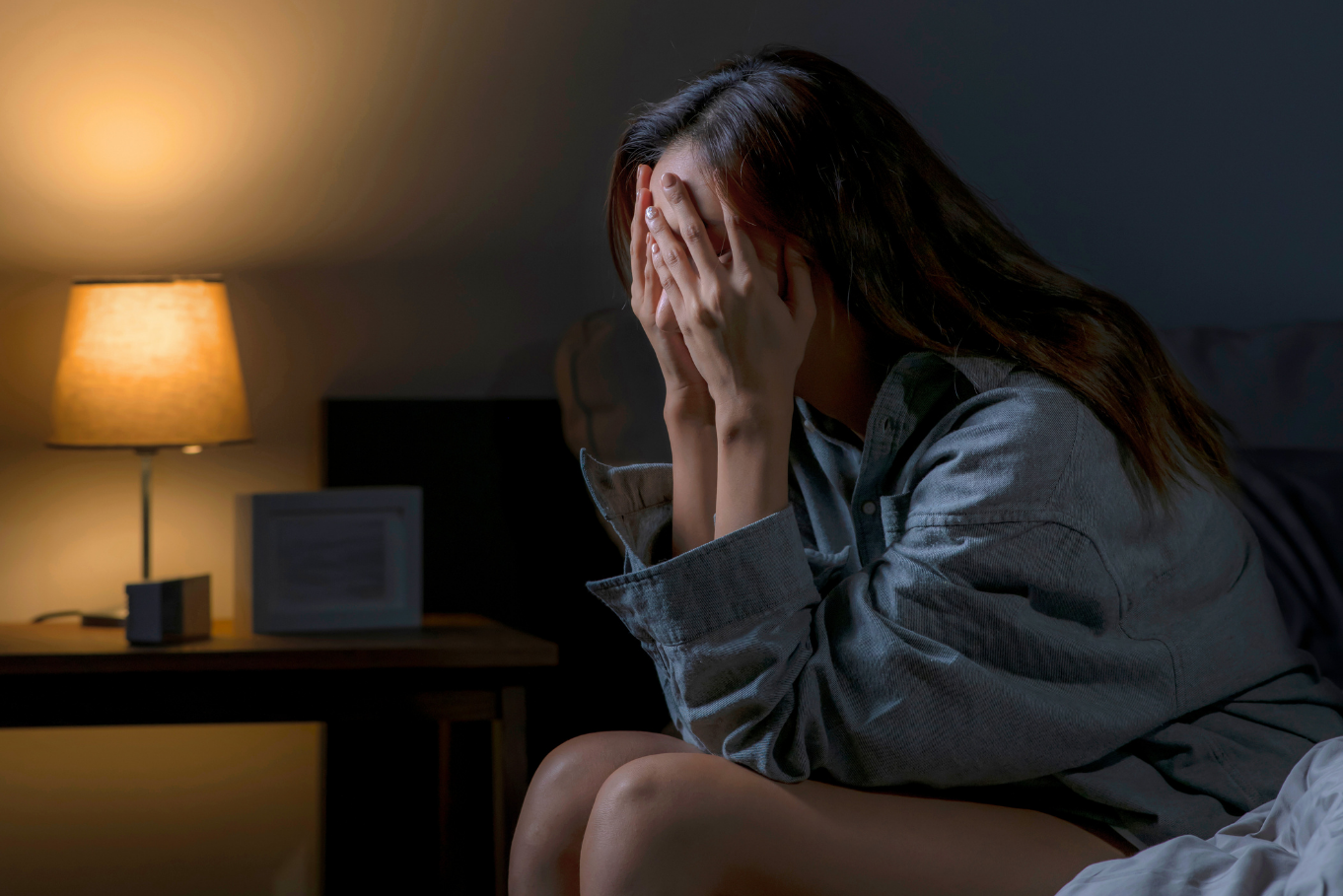
You fall asleep fine. Then somewhere between 2 and 4am, you're wide awake — heart pounding, mind already three steps into tomorrow's to-do list, body inexplicably convinced that now is a great time to be alert. You lie there doing the math on how many hours of sleep you might still salvage. The math never helps.
This isn't your imagination, and it's not just stress. There's real biology behind the 3am wake-up, and there are real options for doing something about it. Let's get into it.
Your Body Has an Alarm System — and It's Misfiring
Your body runs on a cortisol curve. Cortisol — your primary get-up-and-go hormone — is naturally low in the early part of the night and starts rising in the early morning hours to prepare you for waking. In a well-regulated system, that rise is gradual, well-timed, and cooperative.
In perimenopause, the system gets less cooperative. Estrogen and progesterone both help regulate the HPA axis — the system that controls cortisol output. As those hormones fluctuate and decline, cortisol can become erratic: firing in pulses at the wrong time, nudging you awake when you should be in your deepest sleep. Research shows that sleep disruption in menopause increases nighttime cortisol levels and blunts the normal cortisol awakening response — a pattern that feeds on itself, because worse sleep makes cortisol more dysregulated, which makes sleep worse.
Add to that the fact that the second half of the night is naturally lighter territory — more REM, less deep slow-wave sleep — and you have a window of genuine vulnerability that gets wider as estrogen drops.
Melatonin plays a role too. Melatonin production declines with age and its timing can shift earlier. An earlier, reduced melatonin signal means less buffering of those nighttime cortisol pulses, and the 3am window becomes harder to sleep through.
If You Have MCAS or Dysautonomia, There's an Extra Layer
For those with mast cell activation syndrome, the early morning hours are a known high-reactivity window. Mast cells are regulated by circadian clock genes, meaning their activation threshold shifts across the 24-hour cycle — they're more easily triggered at certain times than others. This helps explain why some people with MCAS experience what feels like an alarm going off in the night: histamine surges, adrenaline-like rushes, flushing, heart pounding, and sudden wakefulness in the early morning hours.
This isn't anxiety. It's a mast cell event — and it's worth tracking on your symptom log if it sounds familiar. The timing varies between individuals, and nocturnal waking alone doesn't confirm MCAS (the diagnostic bar is higher than that), but if you have a confirmed or suspected diagnosis, this pattern is worth paying attention to.
Dysautonomia adds yet another layer. Autonomic instability during sleep can produce heart rate swings, blood pressure fluctuations, and sympathetic surges that pull you out of deep sleep or trigger full waking. Even position changes during the night can provoke orthostatic-type responses in people with significant autonomic dysfunction — the nervous system clocks them as a threat and responds accordingly. Your nervous system is trying to protect you. It's just working with faulty threat detection software.
When Your Bladder Is the Culprit
Waking once or more a night to urinate — nocturia — is extremely common and frequently dismissed as just a bladder thing. It deserves more attention than that.
Declining estrogen changes the urethral and bladder tissue — the same genitourinary syndrome of menopause (GSM) that causes vaginal dryness also affects bladder sensitivity and capacity. The bladder becomes more reactive, urgency increases, and the threshold for waking drops. Local genital estrogen — a low-dose estrogen applied directly to the genital and urethral tissue — can be particularly helpful here. A 2025 meta-analysis found a 76% reduction in the odds of nocturia with local estrogen therapy. It works by restoring tissue integrity and reducing reactivity, and it does this without significantly raising systemic hormone levels. Importantly, it can be used whether or not you're also on systemic menopausal hormone therapy (MHT — the umbrella term for estrogen, progesterone, or both, used to manage perimenopause and menopause). It's broadly considered safe across many health profiles and is worth a conversation with your provider if nocturia is affecting your sleep.
There's also an antidiuretic hormone component — ADH, which normally suppresses urine production overnight, can become dysregulated with age, meaning the kidneys produce more urine at night than they should.
And here's the one most people don't know: sleep apnea is a significant and underrecognized cause of nocturia. When breathing is obstructed during sleep, the resulting pressure changes in the chest cause the heart to release atrial natriuretic peptide — a hormone that signals the kidneys to produce more urine. Studies have confirmed that treating sleep apnea with CPAP significantly reduces nocturnal urine volume. Many people spend years managing what they think is a bladder problem when the real issue is happening in their airway. If you're waking more than once a night to urinate and haven't been evaluated for sleep apnea, that's the next step.
Seriously, Rule Out Sleep Apnea First
If you have middle-of-the-night waking, unrefreshing sleep, morning headaches, a racing heart on waking, or daytime fatigue that doesn't budge no matter what you try, please get evaluated for sleep apnea before assuming this is purely hormonal. Sleep apnea is a remarkably good impersonator of a lot of other problems.
It's also significantly underdiagnosed in people assigned female at birth — the presentation looks different here. Less loud snoring, more insomnia, more fatigue and mood disruption. Perimenopause raises the risk substantially, partly because progesterone helps keep the upper airway open during sleep and its loss matters.
For people with hypermobile EDS or HSD, the risk is even higher than most people realize. Studies have found OSA in roughly 32–40% of people with EDS — compared to about 6% of matched controls — making them up to six times more likely to have it than the general population. The reason is structural: connective tissue laxity affects the airway the same way it affects every other collagen-dependent structure in the body. Add hormonal changes on top of pre-existing tissue vulnerability and you have a combination worth taking seriously.
A home sleep study is accessible, often covered by insurance, and takes one night. Worth doing before layering in anything else — untreated sleep apnea will quietly undermine everything on this list.
What Actually Helps
CBT-I: Boring Name, Excellent Results
Cognitive Behavioral Therapy for Insomnia is the recommended first-line treatment for chronic insomnia per the American College of Physicians and the VA/DoD clinical practice guidelines — more effective than sleep medication over the long term, and without the dependency risk. A large network meta-analysis of over 31,000 participants confirmed that the active ingredients are cognitive restructuring, sleep restriction, and stimulus control.
For middle-of-the-night waking specifically, CBT-I targets the hyperarousal loop — the racing mind, the clock-watching, the grim arithmetic of remaining sleep hours — that turns a normal brief awakening into an hour-long ordeal. It teaches the brain that the bed is safe again, and that waking at 3am is not, in fact, an emergency.
One specific rule worth implementing tonight even without formal CBT-I: if you've been awake for more than 20 minutes, get out of bed. Go somewhere dim and quiet, do something low-stimulation, and return only when you feel genuinely sleepy. It feels counterintuitive, but it's one of the most effective single tools for breaking the cycle of lying awake and teaching your brain that the bed is for sleep.
Access to full CBT-I is the main barrier. The CBT-I Coach app — free, developed by the US Department of Veterans Affairs — makes the core tools available without a provider or a waitlist. It includes sleep diary tracking, sleep restriction guidance, stimulus control protocols, and cognitive tools. It won't replace a sleep specialist if you have access to one, but it's a genuinely evidence-based place to start. Search CBT-I Coach in your app store.
Progesterone
Progesterone is the undersung hero of menopausal sleep. Its metabolite allopregnanolone is a potent positive modulator of GABA-A receptors — GABA being your brain's primary calming neurotransmitter. This is the same pathway that benzodiazepines act on, but via a physiological, naturally occurring mechanism rather than a pharmacological one. A systematic review and meta-analysis of randomized controlled trials confirmed that micronized progesterone improves sleep onset latency and subjective sleep quality.
The form and route matter. Oral micronized progesterone — taken at night — is the only route that has been studied for sleep outcomes, and the mechanism explains why: oral progesterone undergoes first-pass metabolism in the gut and liver, generating the allopregnanolone metabolite responsible for the sleep benefit. Transdermal progesterone bypasses that pathway entirely and doesn't appear to produce the same effect. If you're on transdermal progesterone and your sleep is still poor, this distinction is worth raising with your provider.
Synthetic progestins don't have the same neurological activity and may actually worsen sleep in some people — another reason the form matters.
Estrogen
Estrogen doesn't directly sedate — it removes the things that are waking you up. Hot flashes, night sweats, vasomotor symptoms, and the mood reactivity that primes the nervous system for 3am cortisol misfires are all significantly reduced by estrogen. It also supports serotonin and norepinephrine pathways that contribute to mood stability and sleep architecture.
For people whose middle-of-the-night waking is primarily driven by temperature dysregulation or emotional hyperarousal, estrogen is often the most effective single intervention. It clears the obstacles rather than sedating around them.
A note for those with MCAS: estrogen can trigger mast cell flares in some people, particularly when starting or adjusting a dose. Estradiol activates mast cells via estrogen receptor-alpha signaling and can augment histamine release — this is well-documented. For most people this settles as the system recalibrates, but starting low and increasing slowly is the right approach. If you've tried estrogen before and reacted badly, that history is worth revisiting with a provider who understands both MCAS and hormonal therapy. A bad prior experience doesn't necessarily close the door.
Melatonin — and Why the Form Matters
Standard immediate-release melatonin is good at helping you fall asleep. It's less useful for staying asleep, because it clears before the vulnerable early morning window arrives.
Extended-release melatonin is what you want for maintenance insomnia — the kind where falling asleep isn't the problem but staying there is. Sustained-release formulations have a significantly longer half-life than immediate-release, providing a more sustained signal through the second half of the night. The most-studied prolonged-release formulations use 2mg, and dose-response data suggest a range of 2–4mg for sleep maintenance — far below the 5 and 10mg doses sitting on most pharmacy shelves, which are generally unnecessary and can cause grogginess, vivid dreams, or the delightful irony of melatonin-induced waking.
Timing matters as much as dose. Take it 60 to 90 minutes before your desired sleep onset, not right before bed.
For those with MCAS: melatonin and mast cell biology are linked — melatonin has modulatory effects on mast cell activity. Individual responses vary. Start low.
Supplements Worth Knowing About
CBT-I and hormones are the heavy hitters, but a few supplements have enough evidence and safety profile to be worth mentioning — particularly for people who aren't yet using MHT or who want additional support.
Magnesium glycinate (200–400mg at bedtime) modulates GABA receptors and the HPA axis — the same two systems central to the 3am problem. A meta-analysis found it reduced sleep onset latency by around 17 minutes versus placebo in older adults, and a large observational study found higher magnesium intake was associated with better sleep duration and quality. The glycinate form is particularly well-tolerated for those with reactive guts or MCAS.
Glycine (3g before bed) promotes sleep by triggering a drop in core body temperature — a key physiological signal for sleep onset — through receptors in the brain's master clock. It also directly inhibits orexin, the brain's main wake-promoting signal. Small randomized trials have shown improvements in subjective sleep quality and next-day alertness, and the safety profile is excellent.
L-theanine (200–400mg) has the most robust recent evidence among non-melatonin supplements. A 2025 systematic review and meta-analysis of 19 randomized controlled trials found it significantly improved overall sleep quality, sleep onset latency, and daytime dysfunction. It promotes relaxation without sedation — particularly relevant for the hyperarousal component of 3am waking.
Ashwagandha (300–600mg of a standardized extract) has shown significant effects on sleep quality, onset latency, and efficiency in meta-analyses — particularly at higher doses taken for at least eight weeks. Its cortisol-lowering and anxiolytic properties make it well-suited for this population conceptually. Long-term safety data are still limited, so worth discussing with your provider if you're managing multiple conditions.
One important note across all supplements: over-the-counter quality is unregulated. Look for third-party testing verification — USP, NSF International, or ConsumerLab. And none of these have evidence comparable to CBT-I or hormonal therapy. They're supporting players, not the lead.
The Behavioral Foundations — and Why Alcohol Deserves Its Own Mention
Before we wrap up, a few behavioral factors that deserve direct attention because the evidence for them is stronger than most people realize.
Alcohol is the one most worth calling out specifically. It feels like it helps — it's sedating in the first half of the night. But in the second half, as it metabolizes, it fragments sleep, suppresses REM, and increases wakefulness. A 2025 meta-analysis confirmed that even low doses significantly delay REM onset and reduce REM duration, with disruption worsening as amount increases. For this population there's a second hit: a large longitudinal study found that even light drinking was associated with significantly worse vasomotor symptoms, and high-risk drinking increased the odds of night sweats by 76%. If 3am waking and hot flashes are both issues, alcohol is working against you on two fronts simultaneously. Stopping alcohol at least three to four hours before bed is the minimum; eliminating evening alcohol entirely is the highest-yield single behavioral change for this population.
Caffeine after noon is similarly worth addressing — a 2023 meta-analysis found caffeine reduced total sleep time by 45 minutes on average, and coffee consumed up to 8.8 hours before bed still reduced total sleep time. Even caffeine consumed six hours before bed disrupts sleep in ways people often don't attribute to it. Earlier than you think, every time.
Late eating matters too. Eating within three hours of bedtime has been associated with a 61% increased odds of nocturnal awakening, partly through nocturnal reflux that causes arousals people don't always register as reflux. A longer gap between your last meal and bed — aiming for three hours minimum — is worth building in, particularly if you tend toward high-fat or spicy evening meals.
Putting It All Together
Middle-of-the-night waking in perimenopause and menopause is almost never one thing. It's usually a convergence — hormonal dysregulation, circadian disruption, behavioral factors, and for many people in this community, an underlying condition (MCAS, dysautonomia, sleep apnea) that makes the whole system more reactive.
A reasonable order of operations:
Rule out sleep apnea. Address behavioral factors — alcohol, caffeine timing, late eating — because they undermine everything else. If nocturia is part of the picture, address the local tissue with genital estrogen, which can be used alongside or independently of systemic MHT. Optimize hormones — micronized oral progesterone at night first, then systemic estrogen if vasomotor symptoms or mood reactivity are contributing. Consider extended-release melatonin in the 2–4mg range if sleep maintenance is the primary issue. Add supplements as supporting players where appropriate. Layer in CBT-I tools for the hyperarousal component. Address MCAS and dysautonomia as their own systems requiring their own care.
None of these work as well alone as they do together. And none of them will fully land if the circadian foundation isn't in place underneath them — consistent wake time, morning light, a caffeine cutoff that's earlier than you think, and a wind-down signal that tells your nervous system the day is actually over. Dim the lights, brew some chamomile or lavender tea if you tolerate it, slow your breathing down. If lavender hasn't caused irritation for you in the past, applying a lavender-scented lotion as part of your wind-down is a low-effort way to layer in a sensory cue — the evidence is modest but consistent, and the ritual of it matters as much as the pharmacology. If you have MCAS or known skin sensitivities, patch-test first.
The 3am wake-up is not a life sentence. It has causes, and those causes have interventions. You just have to work through the list.
References
Cohn AY, Grant LK, Nathan MD, et al. Effects of Sleep Fragmentation and Estradiol Decline on Cortisol. J Clin Endocrinol Metab. 2023;108(11):e1347–e1357.
Vargas I, Vgontzas AN, Abelson JL, et al. Altered Ultradian Cortisol Rhythmicity as a Potential Neurobiologic Substrate for Chronic Insomnia. Sleep Med Rev. 2018;41:234–243.
Haufe A, Baker FC, Leeners B. The Role of Ovarian Hormones in the Pathophysiology of Perimenopausal Sleep Disturbances. Sleep Med Rev. 2022;66:101710.
Porcari I, Uccella S, Casprini C, et al. Genital Estrogen Therapy for Urinary Symptoms: A Review and Meta-Analysis. Climacteric. 2025:1–10.
Di Bello F, Napolitano L, Abate M, et al. Nocturia and Obstructive Sleep Apnea Syndrome: A Systematic Review. Sleep Med Rev. 2023;69:101787.
Gaisl T, Giunta C, Bratton DJ, et al. Obstructive Sleep Apnoea and Quality of Life in Ehlers-Danlos Syndrome. Thorax. 2017;72(8):729–735.
Sedky K, Gaisl T, Bennett DS. Prevalence of Obstructive Sleep Apnea in Joint Hypermobility Syndrome: A Systematic Review and Meta-Analysis. J Clin Sleep Med. 2019;15(2):293–299.
Nolan BJ, Liang B, Cheung AS. Efficacy of Micronized Progesterone for Sleep: A Systematic Review and Meta-Analysis. J Clin Endocrinol Metab. 2021;106(4):942–951.
Zaitsu M, Narita S, Lambert KC, et al. Estradiol Activates Mast Cells via a Non-Genomic Estrogen Receptor-Alpha and Calcium Influx. Mol Immunol. 2007;44(8):1977–1985.
Cruz-Sanabria F, Bruno S, Crippa A, et al. Optimizing the Time and Dose of Melatonin as a Sleep-Promoting Drug. J Pineal Res. 2024;76(5):e12985.
Furukawa Y, Sakata M, Yamamoto R, et al. Components and Delivery Formats of Cognitive Behavioral Therapy for Chronic Insomnia in Adults. JAMA Psychiatry. 2024;81(4):357–365.
Mah J, Pitre T. Oral Magnesium Supplementation for Insomnia in Older Adults: A Systematic Review and Meta-Analysis. BMC Complement Med Ther. 2021;21(1):125.
Zhang Y, Chen C, Lu L, et al. Association of Magnesium Intake With Sleep Duration and Sleep Quality: Findings From the CARDIA Study. Sleep. 2022;45(4):zsab276.
Kawai N, Sakai N, Okuro M, et al. The Sleep-Promoting and Hypothermic Effects of Glycine Are Mediated by NMDA Receptors in the Suprachiasmatic Nucleus. Neuropsychopharmacology. 2015;40(6):1405–1416.
Bulman A, D'Cunha NM, Marx W, et al. The Effects of L-Theanine Consumption on Sleep Outcomes: A Systematic Review and Meta-Analysis. Sleep Med Rev. 2025;81:102076.
Cheah KL, Norhayati MN, Husniati Yaacob L, Abdul Rahman R. Effect of Ashwagandha Extract on Sleep: A Systematic Review and Meta-Analysis. PLoS One. 2021;16(9):e0257843.
Gardiner C, Weakley J, Burke LM, et al. The Effect of Alcohol on Subsequent Sleep in Healthy Adults. Sleep Med Rev. 2025;80:102030.
Herber-Gast GC, Mishra GD, van der Schouw YT, et al. Risk Factors for Night Sweats and Hot Flushes in Midlife. Menopause. 2013;20(9):953–959.
Gardiner C, Weakley J, Burke LM, et al. The Effect of Caffeine on Subsequent Sleep. Sleep Med Rev. 2023;69:101764.
Chung N, Bin YS, Cistulli PA, Chow CM. Does the Proximity of Meals to Bedtime Influence Sleep of Young Adults? Int J Environ Res Public Health. 2020;17(8):E2677.
Ostovar M, Khademizadeh MH, Namjoyan F, et al. A Systematic Review and Meta-Analysis of Clinical Trials on Lavender for Sleep Disorders in the Elderly. Exp Gerontol. 2025;112919.
