
Why Your Nervous System Needs a Cue, Not Just a Bedtime
You've probably already done the thing where you try to explain your symptoms to a provider and watch their face go slightly blank. The fatigue that isn't tied to how much you slept. The joint pain that flares for no obvious reason. The day you feel clear and capable, followed by three days where getting dressed is the whole task list. At first blush, this may not sound like a pattern.
But more likely than not, there is a pattern. Maybe it's just one that most tracking tools, and most medical intake forms, aren't built to see.
Why the cue does the real work
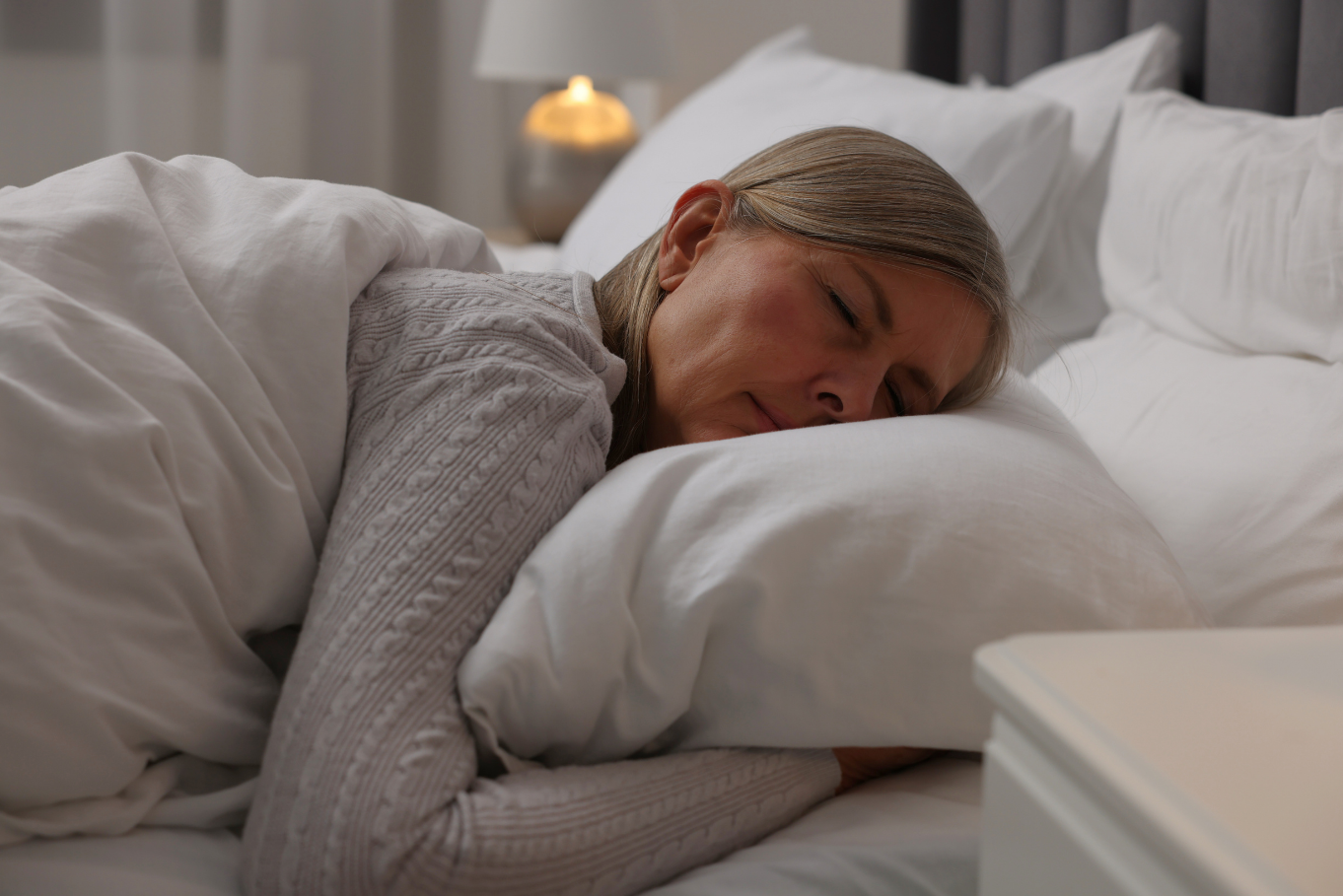
This is the mechanism behind stimulus control, one of the oldest and best-studied pieces of behavioral sleep medicine (think Pavlov's dog). A systematic review and meta-analysis found that stimulus control produced a meaningful improvement in how quickly people fell asleep compared to doing nothing. Although we can all appreciate a comforting bedtime routine, the repetition and association are doing the real work here.
Weighted blankets are one of the more interesting cues in this category, and not just because of their cozy factor. The pressure activates what's sometimes called deep pressure touch, which stimulates the parasympathetic nervous system — the "rest and digest" branch. A randomized controlled trial in adults with insomnia and psychiatric conditions found weighted chain blankets improved sleep and daytime functioning compared to a lighter control blanket. A separate crossover study in healthy young adults found a weighted blanket increased pre-sleep salivary melatonin by roughly 30% compared to a lighter one.
A warm bath or heating pad roughly 1–2 hours before bed is another good option with an additional layer of evidence. Why this works: warming your skin dilates the blood vessels in your hands and feet. Once you're out of the water, that dilated vasculature dumps heat, which accelerates the natural drop in core body temperature that your body needs to fall asleep. A meta-analysis found even 10 minutes of warm water, timed 1–2 hours before bed, meaningfully shortened how long it took people to fall asleep — timing is the whole trick, since doing it right before bed or sleeping in a hot room afterward blunts the effect instead of helping it.
Two quick caveats: this hasn't been specifically tested in POTS or dysautonomia, where the vasodilation response the mechanism depends on may not behave the same way. And if night sweats are part of your picture, finish warming before jumping in bed, and keep the room cool afterward.
Why this is more complicated for you
If your nervous system doesn't shift smoothly between "on" and "off" — which is common with dysautonomia, since the same autonomic regulation that governs blood pressure and heart rate also governs how easily you move into a parasympathetic state — a deliberate external cue may be doing work that might not happen on its own. This isn't a flaw in you. It's a reasonable response to a nervous system that needs more explicit signaling than most.
MCAS adds a genuinely inconvenient wrinkle: mast cell activity itself follows a circadian rhythm, and research shows plasma histamine tends to be lower in the afternoon and peak at night, driven by mast cells' own internal clock genes and further modulated by stress. In other words, if your reactivity seems to pick up specifically in the evening, that's not you imagining it — histamine may genuinely be higher at that hour. A calming wind-down cue isn't going to override that rhythm, but it's one more reason not to layer stress and stimulation on top of a system that's already trending toward more reactive right when you're trying to settle it down.
What this means practically
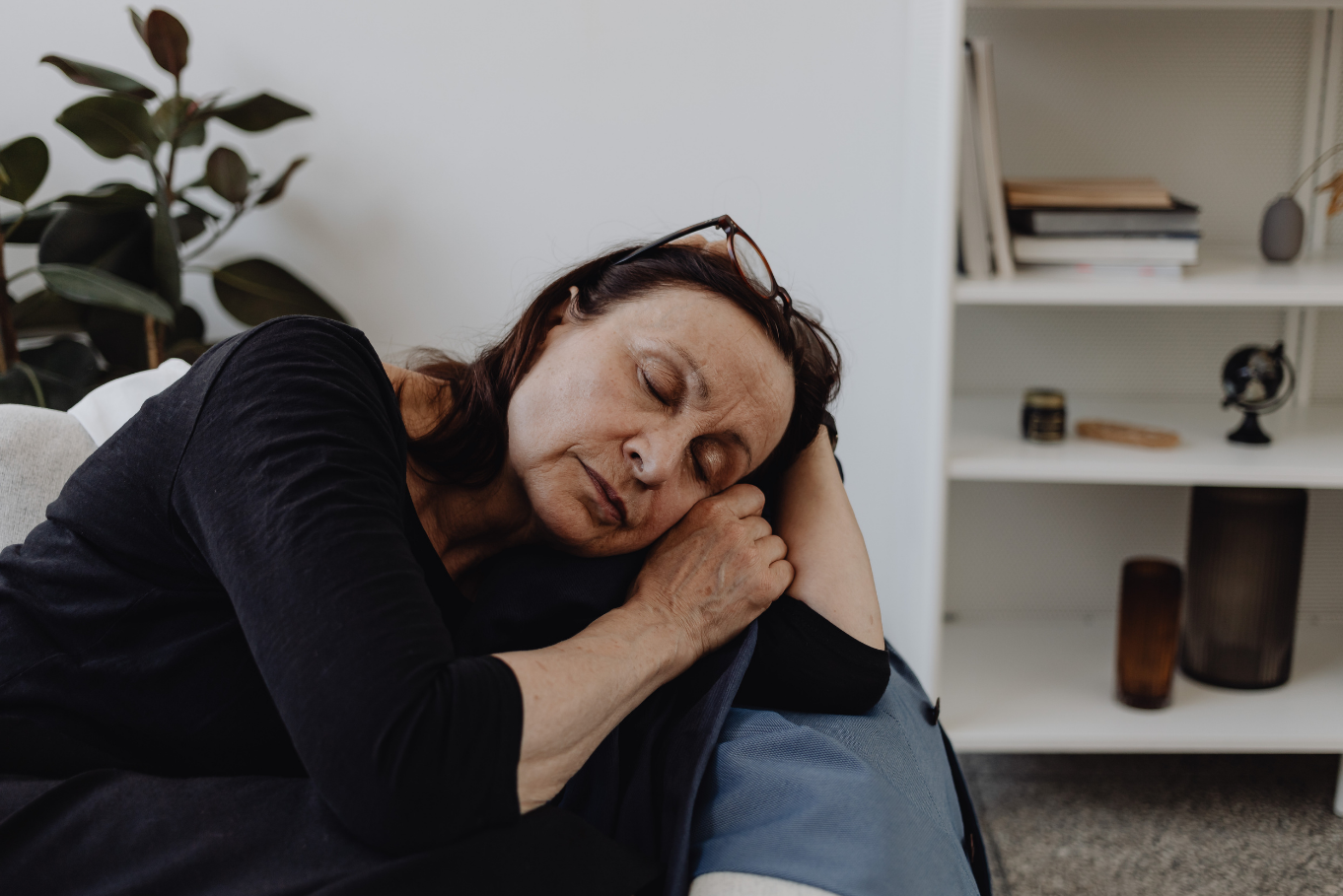
The repetition is the magic; which cue you choose matters much less. Mine is embarrassingly simple: couch, weighted blanket, and a cat who has apparently assigned himself the job of kneading my stomach to aid in digestion. Yours doesn't need to look like that. It needs to be something small enough that you'll actually do it on a low-capacity night, not just on the nights you have energy to spare — that's the whole point of a cue built on flexible anchoring rather than a fixed routine with six steps.
Pick one thing. Repeat it most nights. Let it be genuinely boring and low-effort rather than another wellness project.
None of this replaces the other sleep habits already in play. A wind-down signal doesn't fix a caffeine cutoff that's too late or a wake time that keeps shifting. It's the last piece, not a substitute for the others.
The bigger picture
The BENDY Method is a 12-week habit-based course for perimenopause and menopause in bodies with hEDS, HSD, MCAS, POTS, dysautonomia, and related presentations. Join the waitlist to be first to know when enrollment opens.
References
Jansson-Fröjmark M, Nordenstam L, Alfonsson S, Bohman B, Rozental A, Norell-Clarke A. Stimulus Control for Insomnia: A Systematic Review and Meta-Analysis. Journal of Sleep Research. 2024;33(1):e14002.
Ekholm B, Spulber S, Adler M. A Randomized Controlled Study of Weighted Chain Blankets for Insomnia in Psychiatric Disorders. Journal of Clinical Sleep Medicine. 2020;16(9):1567-1577.
Meth EMS, Brandão LEM, van Egmond LT, et al. A Weighted Blanket Increases Pre-Sleep Salivary Concentrations of Melatonin in Young, Healthy Adults. Journal of Sleep Research. 2023;32(2):e13743.
Haghayegh S, Khoshnevis S, Smolensky MH, Diller KR, Castriotta RJ. Before-Bedtime Passive Body Heating by Warm Shower or Bath to Improve Sleep: A Systematic Review and Meta-Analysis. Sleep Medicine Reviews. 2019;46:124-135.
Kräuchi K. The Thermophysiological Cascade Leading to Sleep Initiation in Relation to Phase of Entrainment. Sleep Medicine Reviews. 2007;11(6):439-451.
Mathias CJ, Owens A, Iodice V, Hakim A. Dysautonomia in the Ehlers–Danlos Syndromes and Hypermobility Spectrum Disorders — With a Focus on the Postural Tachycardia Syndrome. American Journal of Medical Genetics Part C. 2021;187(4):510-519.
Nakamura Y, Ishimaru K, Shibata S, Nakao A. Regulation of Plasma Histamine Levels by the Mast Cell Clock and Its Modulation by Stress. Scientific Reports. 2017;7:39934.
